
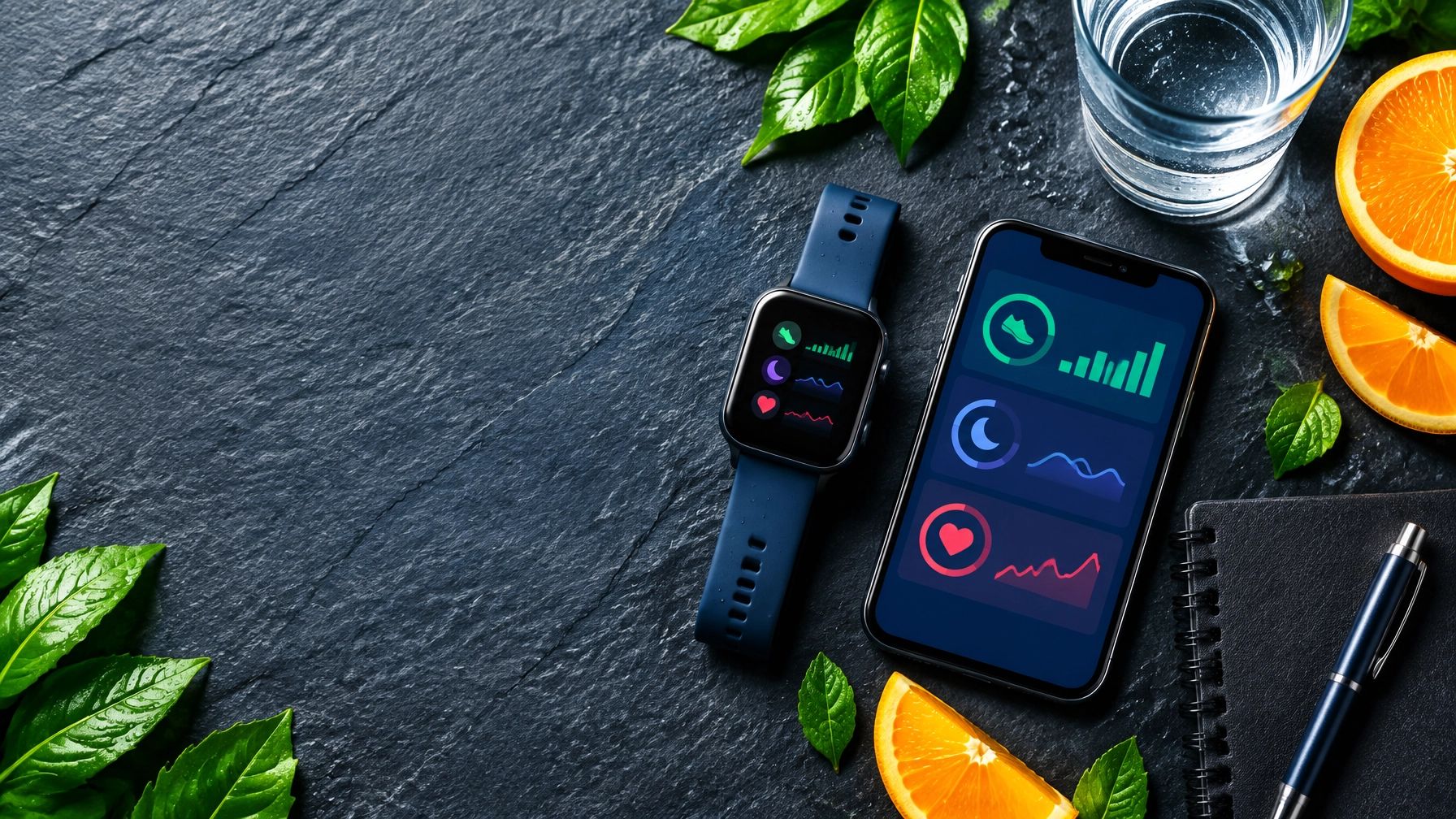
Your fitness tracker can be a helpful part of your wellness journey.
It can remind you to move. It can show your sleep schedule. It can help you notice activity patterns. It may even encourage you to take one more walk or get to bed a little earlier.
But your tracker is not the whole story.
A number on your wrist cannot tell you everything about your health, your progress, or how you feel. It cannot understand your schedule, your stress, your goals, or the effort it took to keep going on a difficult day.
That is why wearable data works best as a supportive tool, not as a source of pressure.
What Your Fitness Tracker Can Tell You
Modern wearables capture several useful signals. The key is knowing what those signals can, and cannot, mean.
Steps and Daily Movement
Step counts can help you notice how much you are moving throughout the day.
You may discover that you walk more on workdays than weekends. You may notice that a short walk after lunch helps you reach your daily movement goal. You may also see that long periods of sitting are common in your routine.
This information can be useful.
Steps give you a simple way to observe movement and look for activity trends. They can help you create a starting point and make small adjustments that fit your life.
Still, steps are only one type of movement. Your tracker may not fully capture strength training, stretching, mobility work, cycling, swimming, or other activities that do not look like regular walking.
A lower step count does not automatically mean you had an unproductive day.
Sleep Timing and Sleep Trends
Your wearable may show when you went to sleep, when you woke up, and how long you were in bed.
That can help you notice patterns.
Maybe you sleep less during busy weeks. Maybe your bedtime changes on the weekend. Maybe you feel better when you create a more consistent evening routine.
These trends can give you helpful questions to consider.
However, sleep stages and sleep quality are usually estimates. Most wearables infer sleep from movement and other signals. They cannot fully measure how restored you feel or diagnose a sleep condition. The University of Iowa Health Care explains that wearable sleep data should be viewed as an estimate, not a replacement for professional evaluation.
Your body’s experience matters, too.
How do you feel when you wake up? Do you have steady energy? Are you able to focus? Those answers belong beside the sleep number.
Heart Rate and Activity Trends
A fitness tracker can help you observe resting heart rate and how your heart rate changes during activity.
Over time, you may see that certain workouts feel easier. You may notice that your resting heart rate changes when your routine, sleep, stress, or health changes.
This is useful information to discuss with a qualified professional when needed. But one unusual reading should not define your health. Wrist-based devices have limitations, especially during intense or irregular movement.
Your wearable is a dashboard. It is not a diagnosis.
If you have concerning symptoms or a health concern, speak with a medical professional rather than relying on your device alone. The Cleveland Clinic recommends using fitness tracker information as part of a bigger health conversation.

What Your Fitness Tracker Cannot Tell You
Your wearable can record data. It cannot fully understand you.
That difference matters.
It Cannot Tell You How Much Energy You Have
Your tracker may estimate calories burned. But an estimate is not the same as a personal measurement of your true energy needs.
Your energy can be affected by sleep, stress, nutrition, hormones, health, recovery, and many other factors. A number on your watch cannot tell you whether you feel strong enough for a workout today or whether your body needs more rest.
Ask yourself:
Do I feel energized, steady, and ready to move?
That answer may be more useful than chasing a calorie number.
It Cannot Measure Your Strength
A tracker may record that you were active for 40 minutes. It cannot tell you how much stronger you are becoming.
It may not understand that:
- You lifted a heavier weight.
- You completed more repetitions.
- You used better form.
- You climbed stairs with more confidence.
- You carried groceries more easily.
- You moved with less stiffness.
Strength progress is often quiet at first. It may show up in daily life before it appears on a dashboard.
It Cannot Fully Capture Your Mood
Some devices offer stress or recovery scores. These may provide interesting patterns, but they do not know your emotional experience.
Your tracker cannot tell whether you feel hopeful, discouraged, calm, overwhelmed, proud, or motivated.
A low stress score does not guarantee that you feel happy. A high score does not mean you are failing.
Your mood deserves your attention without needing to be turned into a number.
It Cannot Tell You How Your Clothes Fit
Your scale and your wearable may show numbers, but they cannot tell you how your favorite clothes feel.
They cannot capture changes in comfort, posture, confidence, or body shape. They cannot show that you are standing taller or feeling more at home in your body.
Those are real forms of progress.
It Cannot Measure Consistency Perfectly
A tracker may show whether you closed a ring or reached a goal. But it does not know how much effort went into your routine.
Consistency is not perfection.
Consistency may look like returning after a busy week, choosing a balanced meal when you could have skipped it, or completing a short workout instead of doing nothing. The device may record the action, but it does not understand the commitment behind it.
It Cannot Tell You If You Are Happier
This may be the most important part.
Your wellness journey is not successful only because a number went down or a goal was completed. You are also building a life that feels better to live.
Are you enjoying movement more? Do you have more confidence? Are you spending time with people you care about? Do you feel proud of how you are taking care of yourself?
Your happiness matters.

The Number on the Scale Is Only One Measure
Weight can be useful information. It can help you observe a longer-term trend.
But the scale does not explain every change.
Daily weight can move because of water, sodium, digestion, sleep, stress, and other normal body changes. One reading cannot tell you whether you gained fat, built muscle, or simply retained water.
That is why your scale should be viewed alongside other signs of progress:
- More stable energy
- Better sleep habits
- Improved strength
- Easier movement
- Clothes fitting differently
- More balanced nutrition
- Greater confidence
- More consistency
- A better relationship with your routine
Your scale is one piece of information. Your tracker is another. Neither one is your identity.
Use Wearable Data Without Creating More Anxiety
How can you make your fitness tracker helpful instead of stressful?
Start by treating the data as information, not a judgment.
Look for Trends, Not Perfect Days
A single day can be unusual. A busy schedule, poor sleep, travel, or a hard workout can change your numbers.
Look at patterns over several weeks.
You might ask:
- Am I moving more than I was last month?
- Are my sleep times becoming more consistent?
- Do certain routines help my energy?
- Am I balancing activity with recovery?
- Is my current goal realistic for my life?
Trends can guide you. They do not need to control you.
Choose One or Two Signals
You do not need to monitor every metric.
Maybe steps help you remember to take movement breaks. Maybe sleep timing helps you create a better evening routine. Maybe heart rate helps you observe how a workout is progressing.
Choose the data that supports your goals. Turn off alerts that create guilt or pressure.
If checking your numbers makes you anxious, take a break. You are allowed to use less data.
Add Human Information
After you look at your tracker, check in with yourself.
How is your energy? How is your mood? How does your body feel? What has been working? What has been difficult?
This is where personal coaching can help. A coach can help you interpret patterns, set realistic goals, and decide what action makes sense next. You do not have to figure out every number alone.

Become Absofitly: Nutritionally Fit, Physically Fit, Mentally Fit
At Absofitly, we believe total wellness includes three connected areas.
Nutritionally Fit
Your nutrition supports your energy, recovery, and everyday goals. Your tracker may show activity, but it cannot build your meals or understand your appetite. Supportive nutrition habits help complete the picture.
Physically Fit
Physical fitness includes movement, strength, mobility, endurance, and confidence. A wearable can record activity, but it cannot assess every part of how your body performs.
Mentally Fit
Mental fitness includes patience, focus, confidence, and the ability to keep moving forward. Your device cannot measure your self-trust or the way your mindset is growing.
You need all three.
That is what it means to become absofitly, not perfect, not pressured, but supported as a whole person.
Let Your Data Support Your Journey
Your fitness tracker can be helpful.
Use it to notice trends. Use it to create reminders. Use it to celebrate movement and learn more about your routine.
But do not let a missed goal erase the good choices you made. Do not let one scale reading define your progress. Do not let a sleep score tell you how your day must go.
The most useful wellness plan includes both information and understanding.
If you would like help turning your wearable data, nutrition habits, movement goals, and personal priorities into a balanced plan, contact Absofitly for a free consultation.
Explore our individual fitness coaching, learn about our personalized weight loss programs, and discover how our holistic approach to wellness can support your next step.
Your numbers can guide you. Your whole journey matters more.

0 Comments