
You don’t need a gym membership to feel stronger in everyday life. A chair, a clear patch of floor, and a few minutes can help you practice movements you use to sit, stand, reach, lift, and walk.
These five simple exercises can be adapted to your starting point. Move at a pace that feels manageable, use a comfortable range of motion, and build consistency before adding a challenge. That’s a practical way to work on strength and mobility, and to learn how to build sustainable fitness habits.
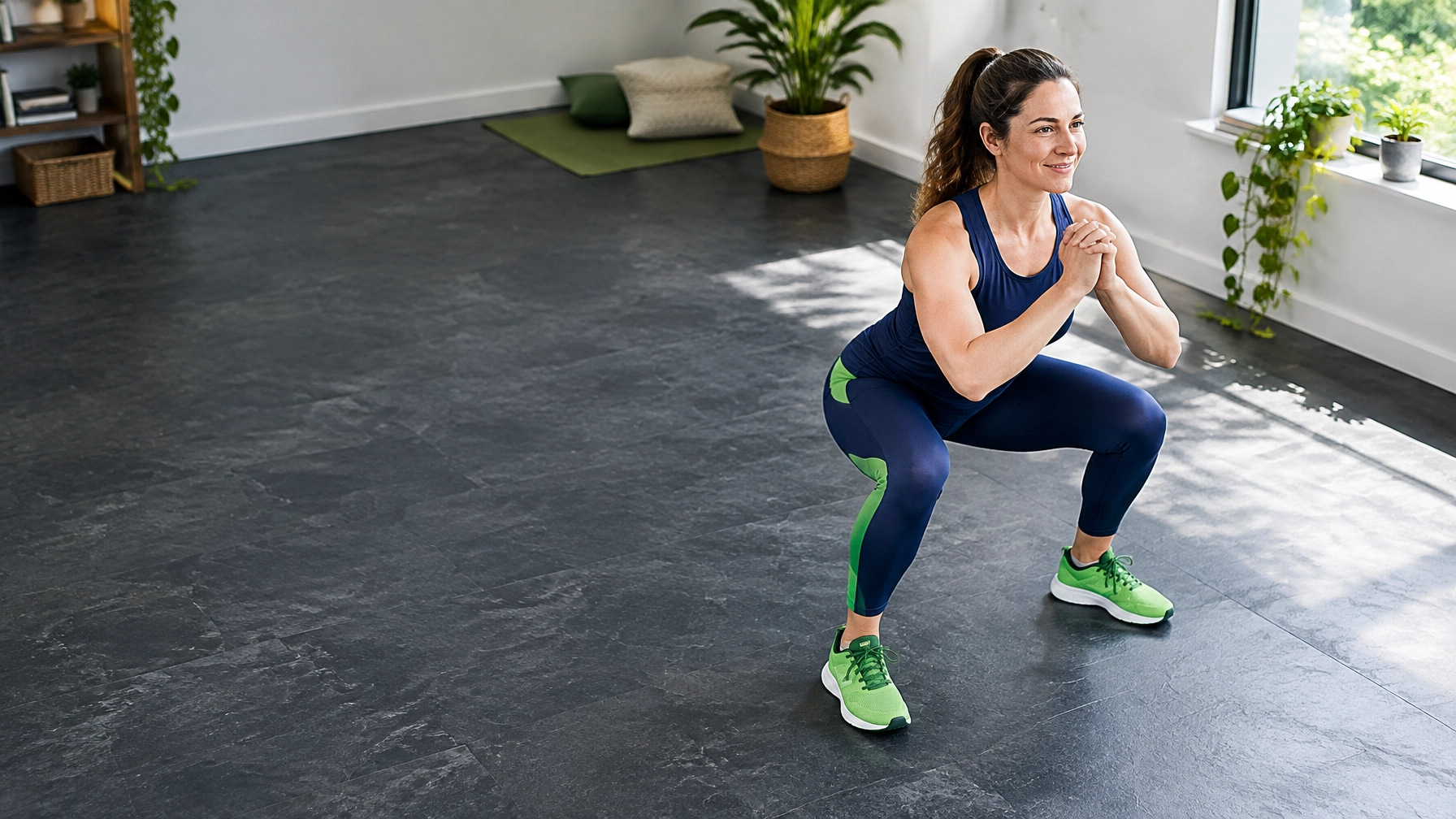
1. Squat: Practice sitting and standing
Squatting is part of everyday life, from getting up from a chair to reaching down for something. Practicing this movement can help you build lower-body strength and control.
Try it: Stand in front of a sturdy chair with your feet about hip- to shoulder-width apart. Send your hips back as if you’re about to sit. Bend your knees only as far as feels comfortable, then press through your feet to stand. Keep your knees pointing in the same general direction as your toes.
Use the chair as a target, or hold a counter for balance. As the movement feels easier, try standing without the chair or lowering more slowly. There’s no need to force a deep squat. A steady, comfortable movement is a strong place to start.
2. Incline push-up: Build pressing strength
Push-ups work your chest, shoulders, arms, and trunk. An incline makes the movement easier to scale, so you can begin at a level that suits you.

Try it: Place your hands on a stable wall or counter, a little wider than your shoulders. Step your feet back and keep your body in a comfortable, straight line. Bend your elbows to bring your chest toward the surface, then press away. Keep the movement controlled and stop if you feel pain.
A wall push-up is a good starting option. When you feel ready, try a lower, sturdy surface. The goal isn’t to rush toward floor push-ups; it’s to choose a version you can do with good control.
3. Hip hinge: Move with confidence when you reach down
Picking up laundry, a grocery bag, or a dropped item asks your body to bend and stand back up. A hip hinge helps you practice moving through your hips while keeping your back comfortable and controlled.

Try it: Stand tall with your knees soft. Push your hips back, letting your hands slide down your thighs. Keep your spine long and your movement smooth. Then press through your feet and bring your hips forward to stand.
Start with a small range. If it feels comfortable, practice reaching toward a chair or another raised surface. You can add a light household object later, but there’s no need to lift anything heavy to learn the movement.
4. Supported reverse lunge: Work on balance and one-leg strength
Walking up stairs, stepping around an obstacle, and getting up from the floor all involve shifting your weight from one leg to another. A supported lunge gives you a simple way to practice that control.

Try it: Stand beside a sturdy chair or counter and hold it lightly. Step one foot back, bend both knees a little, then press through your front foot to return to standing. Keep the step small and the movement comfortable. Try a few repetitions on one side, then switch.
You can also practice standing in a split stance and gently bending and straightening your knees without stepping. Use support as needed. Balance is part of the exercise, not a test you have to pass.
5. Carry: Make an everyday walk work for you
Carrying shopping bags or a small backpack is a familiar movement that asks you to walk while holding a load. It can help you practice posture, grip, and trunk control.

Try it: Choose a light, secure object you can hold without leaning or straining. Stand tall, relax your shoulders, and take a short walk across a clear space. Set the object down with control. Start with one or two short walks, and stop if your posture or grip becomes uncomfortable.
A light backpack or small household item can work too. Keep the load manageable, and make sure your path is clear before you begin.
Put the movements together
You can practice these movements on two or more days each week, with rest days or lighter activity between sessions. Federal guidance recommends muscle-strengthening activity involving the major muscle groups at least two days a week; bodyweight exercises can count. See the Physical Activity Guidelines for Americans for general activity recommendations.
Here’s one simple way to begin:
- Choose one comfortable version of each movement.
- Try 6–10 controlled repetitions of the squat, push-up, hinge, and lunge.
- Take one or two short walks for the carry.
- Rest when you need to, and finish while you can still move with control.
This is a starting point, not a rulebook. You might do fewer repetitions, take longer breaks, or practice only a few movements at a time. When an exercise feels comfortable, you can add a repetition, slow down slightly, or choose a somewhat more challenging version.
Make mobility part of the movement
Mobility isn’t about pushing into the deepest stretch. It’s about moving through a comfortable range with control. Try smooth, steady repetitions. Notice how the movement feels, and give yourself room to adjust your stance, range, or support.
If you feel sharp or worsening pain, stop and choose an easier option. If you have an injury, a health condition, or concerns about starting exercise, ask a qualified health professional for guidance on what’s appropriate for you.
Small steps can support total body wellness
Strength and mobility are important parts of the picture, alongside nutrition, recovery, and mental wellness. A plan that fits your schedule and your starting point is often easier to return to than a routine that feels too demanding.
That’s the idea behind holistic fitness coaching: support that considers your goals and the habits that make progress feel manageable. Whether you want to feel stronger, improve your balance, get toned, or build more confidence in everyday movement, you can start with small steps and keep building.
At Absofitly, our individual fitness coaching is designed to help you work toward your goals with personalized guidance. A plan can be shaped around your needs, whether you’re new to movement or ready for a fresh challenge.
Your next step can be simple
You don’t have to do every movement perfectly, or change everything at once. Start with the version that feels right today. Come back to it, notice what gets easier, and build from there.
If you’d like help finding a routine that fits your goals, learn more about our programs and request a free consultation. We’re here to help you take the next step toward strength, mobility, and total body wellness.

0 Comments