
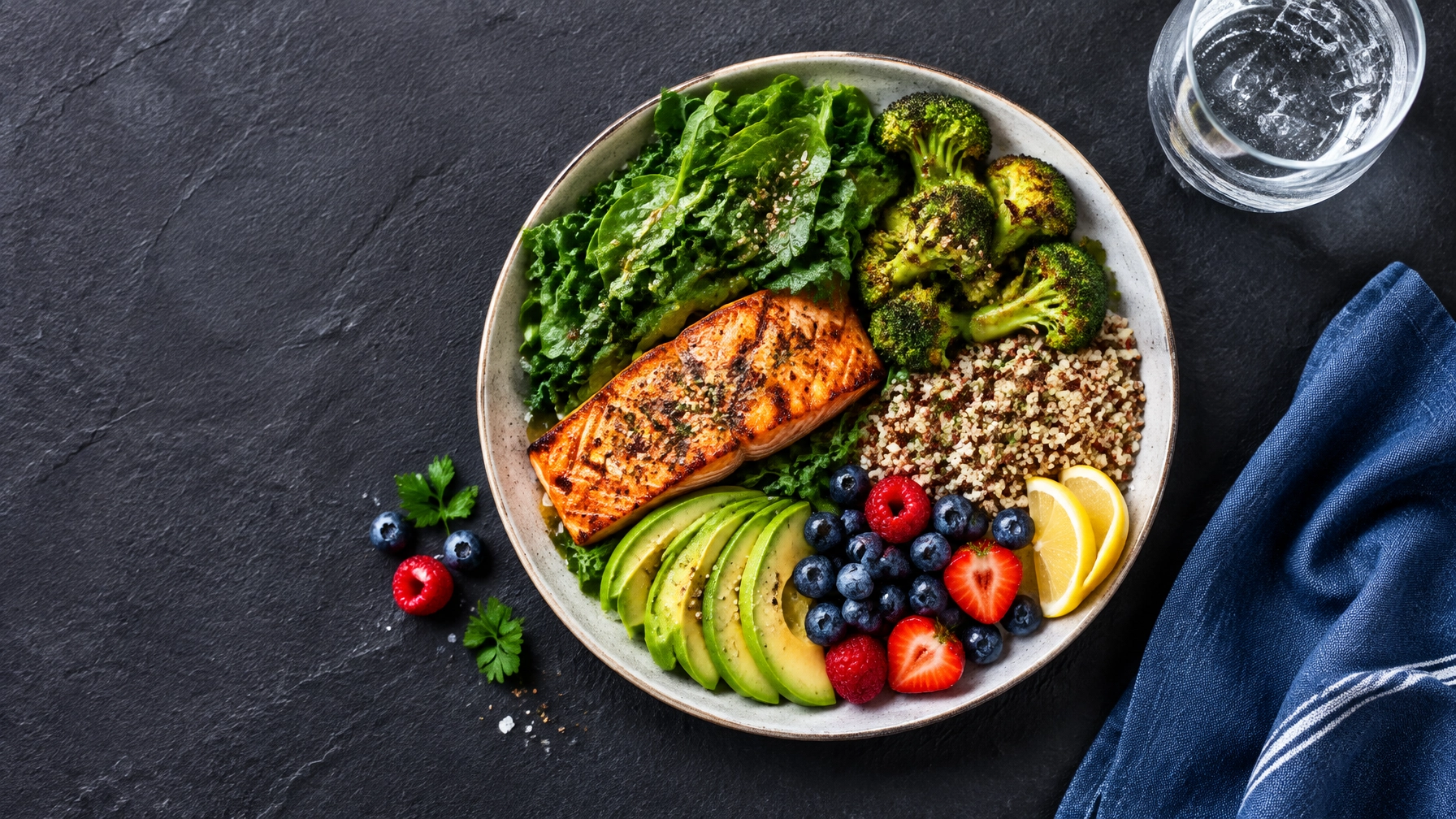
Do you ever eat a meal and feel hungry again an hour later?
You may not need more willpower. You may need a more balanced plate.
A satisfying meal gives your body a mix of protein, fiber, smart carbohydrates, and healthy fats. Together, these foods can help you feel full, support steady energy, and make your wellness goals feel more realistic.
This is one of the most practical sustainable weight loss tips because it is simple, flexible, and repeatable. You do not have to ban your favorite foods. You do not have to eat tiny portions. You can build meals that support your body and leave you feeling satisfied.
Full and satisfied beats restricted and frustrated.
The Balanced Plate Formula
A balanced plate is not about perfection. It is a helpful visual guide for everyday meals.
Start with:
- A palm-sized serving of protein
- Plenty of fiber-rich vegetables and fruit
- A portion of smart carbohydrates
- A small serving of healthy fat
- Water or another low-sugar drink
The familiar plate method often uses half the plate for vegetables and fruit, one-quarter for protein, and one-quarter for whole grains or other nutrient-rich carbohydrates. You can learn more through the Harvard Healthy Eating Plate guide.

5 Simple Steps to Build a Plate That Keeps You Full
1. Start With Protein
Protein is the anchor of your plate.
Begin with about a palm-sized serving. For many people, that may provide approximately 25–40 grams of protein, depending on the food and portion. Your personal needs can vary, but this range is a useful starting point for a satisfying meal.
Try:
- Chicken or turkey
- Fish or seafood
- Eggs
- Greek yogurt or cottage cheese
- Lean beef
- Tofu or tempeh
- Beans and lentils
Protein supports muscle, helps you stay satisfied, and gives your meal structure. Starting with protein can also make it easier to choose the rest of your plate instead of building a meal around bread, chips, or another quick option.
Ask yourself: What is my protein today?
That one question can make meal planning much easier.
2. Add Fiber-Rich Vegetables and Fruit
Next, fill a large part of your plate with colorful produce.
Vegetables and fruit add fiber, volume, color, and important nutrients. Fiber-rich foods can help your meal feel more filling without making it feel heavy.
Choose a mix of:
- Leafy greens
- Broccoli and cauliflower
- Carrots and bell peppers
- Green beans and zucchini
- Tomatoes and cucumbers
- Berries, apples, oranges, or pears
Fresh, frozen, and cooked vegetables all count. You do not need to prepare an elaborate salad every day. A bag of frozen vegetables, baby carrots, or a piece of fruit can be enough to make your plate more balanced.
Try to eat a variety of colors throughout the week. Green, red, orange, purple, and yellow foods each bring something different to your plate.
3. Choose Smart Carbs: Do Not Banish Them
Carbohydrates are not the enemy.
Your body uses carbohydrates for energy, especially when you are active. Removing them completely can make meals feel less satisfying and may leave you searching for snacks later.
Instead, choose smart carbohydrates that bring fiber and staying power.
Good options include:
- Oats
- Brown rice
- Quinoa
- Whole-grain bread or pasta
- Potatoes or sweet potatoes
- Corn
- Beans and lentils
- Whole fruit
A simple serving can be about one cupped hand, but your needs may change depending on your activity, goals, and hunger.
The goal is not to eat as few carbohydrates as possible. The goal is to choose carbohydrates that support your energy and fit your plate.
4. Include Healthy Fat for Satiety and Flavor
Healthy fats help your food taste better. They can also make a meal feel more satisfying.
Keep the portion moderate because fats are energy-dense, but do not be afraid to include them.
Try:
- Avocado
- Olive oil dressing
- Nuts or seeds
- Natural nut butter
- Olives
- Salmon or other fatty fish
A thumb-sized serving of oil, a small handful of nuts, or a few slices of avocado may be enough for your meal.
This step matters because a plate with protein and vegetables may be nutritious, but adding a little healthy fat can help it feel complete. Flavor matters. Enjoyment matters. A meal you enjoy is easier to repeat.
5. Build the Plate in the Right Order: Then Take a 10-Minute Walk
Here is your simple plate-building order:
- Add your protein.
- Fill a large section with vegetables or fruit.
- Add a smart carbohydrate.
- Finish with a small amount of healthy fat.
- Drink water.
- Take a relaxed 10-minute walk after your meal when you can.
This order gives you a quick routine to follow, especially on busy days. It helps you build the meal before you start eating, instead of deciding portion by portion when you are already very hungry.
The short walk is not a punishment or a way to “earn” your food. It is simply a gentle movement habit that can support your routine, digestion, mood, and daily activity.
You can walk around your neighborhood, move around the office, or take a few laps through your home. Ten minutes is a strong place to begin.
A Simple One-Week Balanced Plate Plan
Use this plan for ideas. Mix and match foods based on your preferences, schedule, and household.
Breakfasts
Monday: Scrambled eggs, whole-grain toast, berries, and avocado
Tuesday: Greek yogurt with oats, blueberries, chia seeds, and a small spoonful of nut butter
Wednesday: Vegetable omelet with a side of roasted potatoes and an orange
Thursday: Oatmeal topped with Greek yogurt, sliced banana, walnuts, and cinnamon
Friday: Cottage cheese, whole-grain toast, sliced tomato, and fruit
Lunches
Monday: Grilled chicken bowl with greens, brown rice, cucumber, peppers, and olive oil dressing
Tuesday: Turkey and avocado whole-grain wrap with carrots and an apple
Wednesday: Lentil and vegetable soup with a side salad and whole-grain crackers
Thursday: Tuna or chickpea salad over greens with roasted sweet potato
Friday: Tofu or chicken stir-fry with mixed vegetables and quinoa
Dinners
Monday: Baked salmon, roasted broccoli, quinoa, and avocado
Tuesday: Turkey taco bowl with black beans, lettuce, tomatoes, corn, brown rice, and salsa
Wednesday: Grilled chicken, roasted vegetables, a baked potato, and a simple side salad
Thursday: Bean and vegetable chili with a small serving of whole-grain bread
Friday: Shrimp or tofu stir-fry with vegetables, brown rice, and sesame seeds
No meal plan needs to be perfect. The goal is to create several easy options you can return to when life gets busy.

Common Balanced Plate Mistakes and Quick Fixes
Mistake: Your plate is mostly carbohydrates
A large serving of pasta, rice, or bread may taste good, but it may not keep you full for long by itself.
Quick fix: Add protein and vegetables first. Then enjoy your carbohydrate portion.
Mistake: You forget protein at breakfast
A light breakfast may leave you hungry before lunch.
Quick fix: Add eggs, Greek yogurt, cottage cheese, or a protein-rich smoothie.
Mistake: You avoid all fats
Fat-free meals can sometimes feel unsatisfying and bland.
Quick fix: Add avocado, nuts, seeds, olive oil, or another small healthy-fat serving.
Mistake: You wait until you are extremely hungry
When you reach the point of intense hunger, balanced choices can feel harder.
Quick fix: Keep simple options available, such as fruit, yogurt, nuts, boiled eggs, or prepared vegetables.
Mistake: You expect every meal to look the same
Some days will include restaurant meals, leftovers, or quick foods.
Quick fix: Use the same structure wherever you are. Find the protein, add produce, choose a smart carbohydrate, and include a little healthy fat.
How the Balanced Plate Supports the Absofitly Approach
At Absofitly, we believe total wellness includes three connected areas:
- Nutritionally fit
- Physically fit
- Mentally fit
A balanced plate supports being nutritionally fit by helping you choose food that fuels your body and keeps you satisfied.
A 10-minute walk and regular movement support being physically fit. You can start at your current level and build from there.
Choosing satisfaction instead of restriction supports being mentally fit. You are not labeling food as “good” or “bad.” You are learning how to care for yourself with flexible, practical choices.
That is what it means to become absofitly: totally fit in the areas that support your whole life.

Make Your Next Plate a Supportive Choice
You do not need a perfect meal plan to make progress.
Start with protein. Add colorful produce. Keep smart carbohydrates on the plate. Include healthy fat. Take a short walk when you can.
These small choices can help you build sustainable fitness habits without making your life feel restricted.
Whether you want sustainable weight loss, more energy, improved fitness, or a healthier daily routine, a simple plate framework gives you a place to begin. And if you would like more personal guidance, Absofitly’s wellness and weight loss coaching can help you create a plan that fits your goals.
You can also explore individual fitness coaching for support with movement, strength, weight loss, muscle gain, or overall wellness.
GET YOUR FREE CONSULTATION TODAY
Ready to feel more full, supported, and confident in your wellness journey?
Schedule your free consultation and discover your next step toward being absofitly.
Start with one plate. Keep it simple. Keep moving forward.

0 Comments