
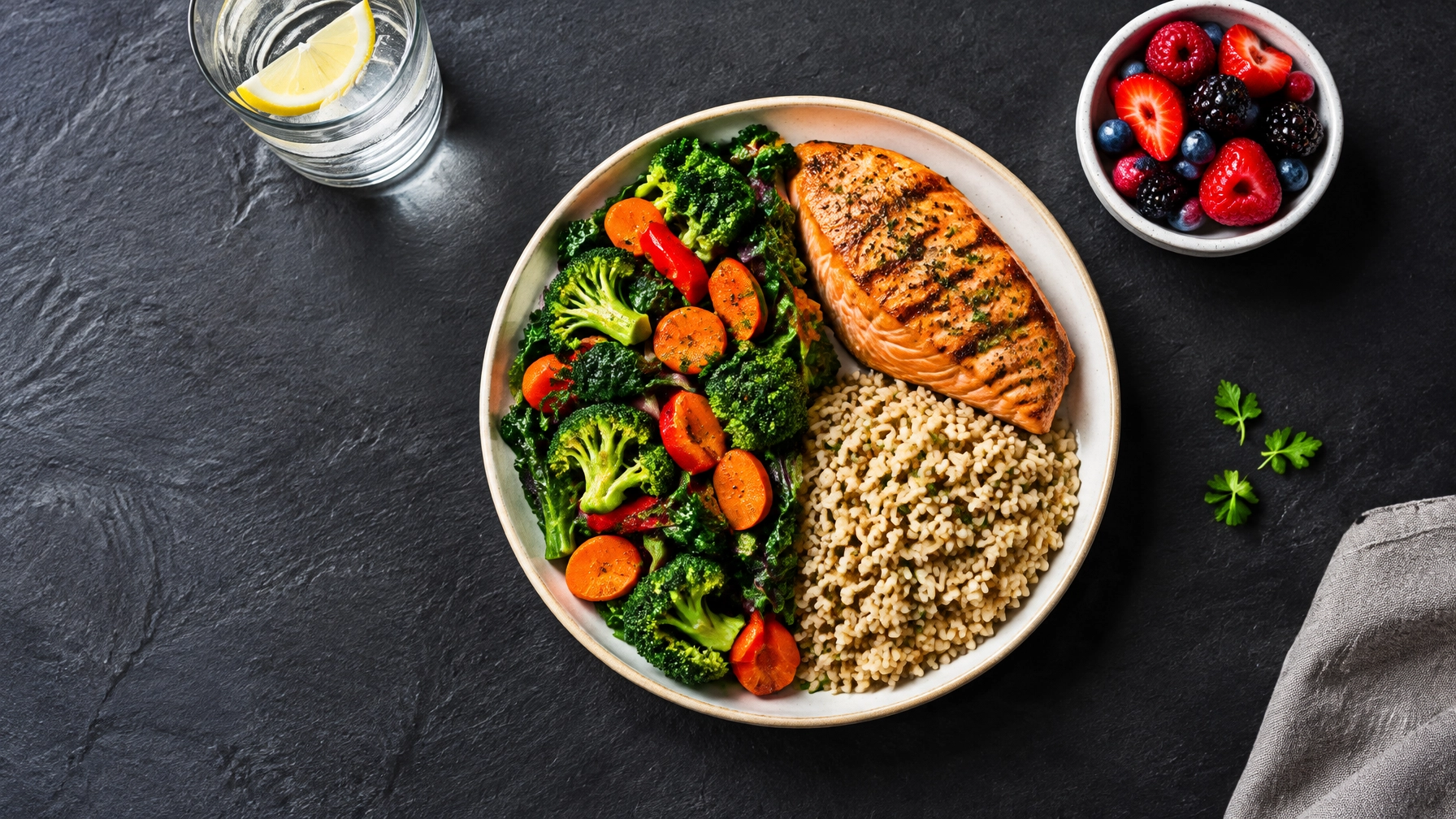
Want a simple way to make dinner feel more balanced, without weighing every ingredient or turning mealtime into math? Try the easy plate method. It’s a flexible visual guide that can help you build satisfying meals and practice sustainable weight loss tips one plate at a time.
The idea is straightforward: fill about half your plate with vegetables, one quarter with protein, and one quarter with a carbohydrate food. You can adjust the details to fit your appetite, preferences, culture, and daily routine. It’s a starting point, not a strict rulebook.
What Is the Easy Plate Method?
Think of your dinner plate as a helpful guide:
- Half vegetables: leafy greens, broccoli, peppers, carrots, tomatoes, green beans, or other non-starchy vegetables.
- One quarter protein: beans, lentils, tofu, eggs, fish, chicken, or another protein you enjoy.
- One quarter carbohydrates: brown rice, potatoes, oats, corn, whole-grain bread, or pasta.
You can add a small amount of healthy fat, such as avocado, nuts, seeds, or olive oil. Water or another unsweetened drink is a simple choice alongside your meal.
This approach is similar to the CDC’s plate-planning guide, which uses vegetables, protein, and carbohydrate foods to help make meal portions easier to picture. The Harvard Healthy Eating Plate also offers a visual guide for building balanced meals.

Why a Simple Plate Can Support Your Goals
Healthy eating doesn’t need to be perfect to be helpful. A visual guide can make it easier to notice what’s on your plate and add variety without tracking every bite.
Vegetables bring color, texture, and fiber to a meal. Protein foods can make meals satisfying. Carbohydrates provide energy and can be part of a balanced eating pattern. The goal isn’t to label foods as “good” or “bad.” It’s to create a meal that helps you feel nourished and ready for what comes next.
Could a balanced plate lead to weight loss all by itself? Not necessarily. Weight change is influenced by your overall eating pattern, activity, health, and many other factors. But simple, repeatable choices can help you build habits that support your goals over time. The NHS guide to healthy eating when trying to lose weight also emphasizes practical changes you can keep up with.
Build Your Plate in Three Easy Steps
1. Start with vegetables
Choose vegetables you like and make them a generous part of your meal. They can be fresh, frozen, roasted, steamed, or sautéed. A bag of frozen vegetables can be a convenient option on a busy night.
Try broccoli with garlic, a handful of salad greens, sliced peppers, or roasted carrots. If you’re not used to filling half your plate with vegetables, start with a little more than usual. Small steps count.
2. Add a protein you enjoy
Protein can come from both animal and plant foods. Think eggs, fish, chicken, tofu, lentils, chickpeas, or beans. You don’t need a complicated recipe. A can of rinsed beans or leftover chicken can help make dinner quicker.
Pick what works for your taste, budget, and routine. A helpful eating habit is one you can actually picture yourself repeating.
3. Choose a carbohydrate that fits
Potatoes, rice, corn, pasta, bread, fruit, and grains can all have a place in your meals. When you can, choose whole-grain or higher-fiber options, such as brown rice or whole-grain bread. You don’t have to cut out carbohydrates to try the plate method.
The quarter-plate idea is a guide, not a hard limit. Your needs may vary depending on your activity, appetite, health, or personal goals.

Your “Start Tonight” Plate
Keep it simple. Tonight, you could make:
- Half a plate: roasted broccoli and peppers with a side salad.
- One quarter: grilled chicken, tofu, or beans.
- One quarter: brown rice, quinoa, or a baked potato.
- Alongside: water, sparkling water, or another unsweetened drink.
No time to cook from scratch? Use pre-washed greens, frozen vegetables, leftover protein, or a ready-to-heat grain. The best plate is not the fanciest one. It’s one that helps you take a step toward your goals without making dinner harder than it needs to be.
Make the Method Work for Real Life
A sustainable routine needs room for your real schedule. Here are a few ways to keep the method flexible:
- At breakfast: pair fruit or vegetables with a protein food and a grain. For example, try berries with yogurt and oats, or eggs with tomatoes and whole-grain toast.
- At lunch: build a bowl with vegetables, beans or chicken, and rice or another grain.
- When dining out: look for a meal with vegetables, a protein choice, and a side of potatoes, rice, or bread. You can ask for extra vegetables or save part of a large meal for later.
- When plans change: choose the most balanced option available. One meal doesn’t define your progress.
If a full plate feels like too much food, use a smaller plate or adjust portions to your comfort. If you’re hungry, active, or following specific nutrition guidance, your plate may need to look different. People with medical conditions or particular nutrition needs can check with a qualified health professional for individual advice.
Sustainable Weight Loss Tips Start with Repeatable Habits
The plate method is one practical tool, not a pass-or-fail test. You might use it at dinner first, then try it at lunch when it feels familiar. You might add one more vegetable, plan a simple protein ahead, or keep an easy grain option in the pantry.
Those choices can support progress because they fit into everyday life. You’re not aiming for a perfect plate every time. You’re practicing a pattern that works for you, one meal at a time.
And remember, your wellness journey includes more than food. Regular movement, rest, stress management, and the way you speak to yourself all matter. At Absofitly, we believe in becoming absofitly: nutritionally fit, physically fit, and mentally fit. That’s the heart of total body wellness, supporting the whole you as you work toward feeling stronger and healthier.

Keep Your Progress Personal
Your goals are yours. Maybe you want to lose weight, feel more energized, get stronger, or create a steadier routine. The easy plate method can give you a starting point, while personalized support can help you make choices that suit your needs and lifestyle.
Explore Absofitly’s personalized weight loss programs or learn about individual fitness coaching if you’d like support with your broader wellness goals.
You don’t have to figure out every step today. Try one balanced plate tonight. Then build on it in a way that feels doable for you.
Ready for Support With Your Goals?
If you’d like help creating a plan that fits your life, Absofitly offers a free consultation to help you explore your next steps. Get your free consultation and start building a routine for sustainable weight loss and total body wellness: one practical choice at a time.

0 Comments