
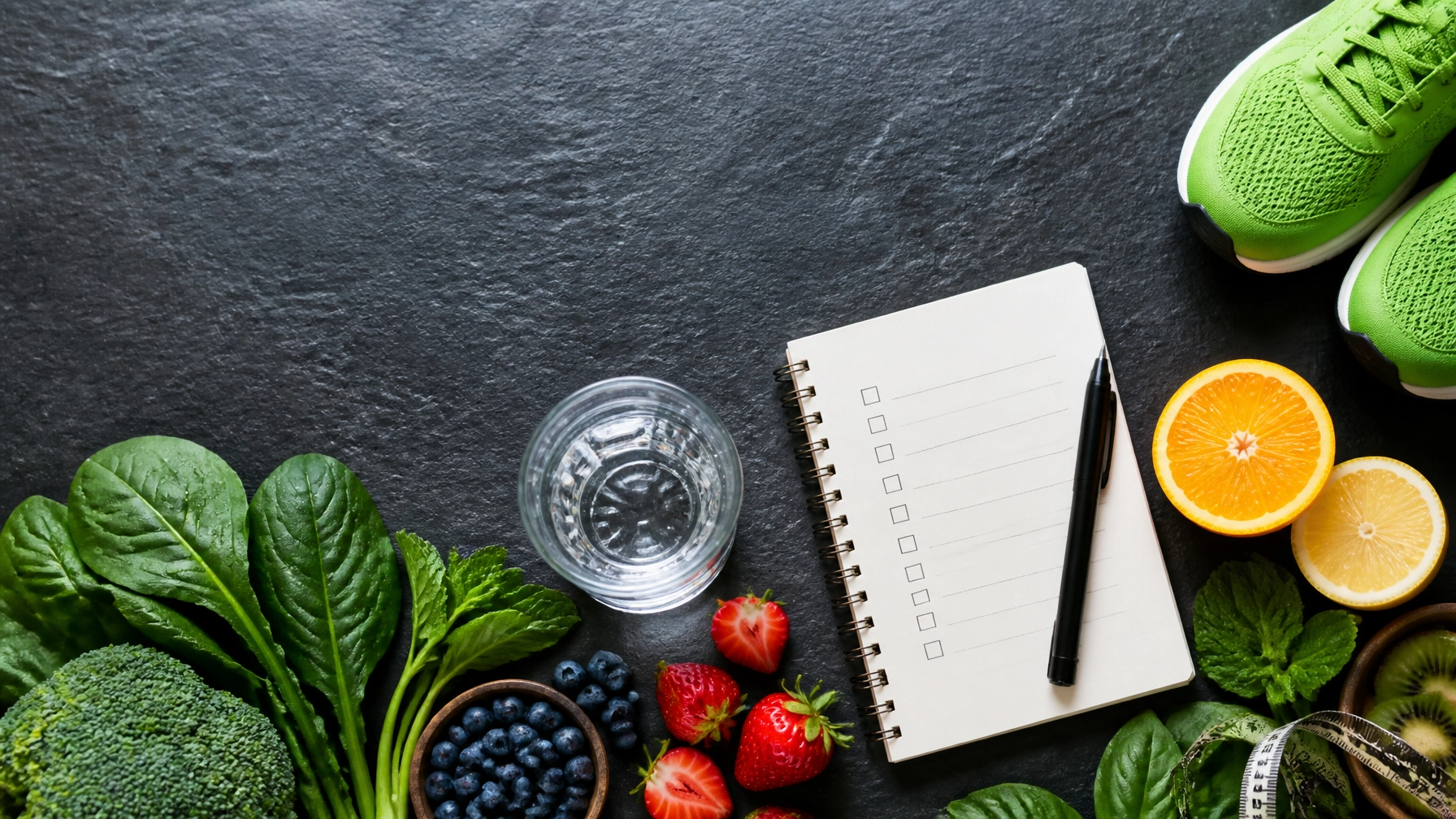
Healthy choices can feel difficult when every meal, workout, and daily decision depends on willpower.
You may start the morning with a clear plan. Then work gets busy. Your energy drops. The day gets away from you.
This does not mean you are lazy or lacking discipline. It may simply mean your healthy habits need a better system.
The goal is to make healthy choices easier to repeat. With tiny habits, habit stacking, simple rewards, and a supportive environment, you can build routines that work with your life.
This is how you become absofitly : nutritionally fit, physically fit, and mentally fit : one practical choice at a time.
Why Healthy Choices Do Not Need to Be Complicated
Many people try to change everything at once.
They plan strict meals, long workouts, early mornings, perfect sleep, and no missed days. It sounds motivating at first. But a plan that requires constant effort can become difficult to maintain.
Sustainable weight loss habits usually begin smaller.
You do not need to rebuild your whole life this week. You need one healthy action that is clear, simple, and easy to repeat.
Ask yourself:
- What is one nutrition habit I can make easier?
- What is one movement habit I can repeat?
- What is one small action that would help me feel more in control?
Small actions create a starting point. Repeated actions create a routine. Routines can become automatic.
Start With Tiny Habits
A tiny habit is a small action that takes very little time or effort.
It may seem almost too easy. That is the point.
When a habit is small, you are more likely to do it on busy days, tired days, and low-motivation days. You are building consistency before increasing the challenge.
Try starting with:
- Drinking one glass of water after waking up
- Adding one vegetable to lunch or dinner
- Walking for five minutes after a meal
- Doing five bodyweight squats
- Stretching for 30 seconds after sitting at your desk
- Preparing one healthy snack for the next day
- Taking one slow breath before eating
Your first goal is not to do the most. Your first goal is to show up.
Once the action feels normal, you can build from there.
Use Habit Stacking to Create a Clear Cue
Habit stacking means attaching a new healthy habit to something you already do.
You already have many automatic routines in your day. You brush your teeth. You make coffee. You check your phone. You sit down for meals. These routines can become cues for new actions.
Use this simple formula:
After I [existing habit], I will [tiny healthy action].
Examples:
- After I brush my teeth, I will drink one glass of water.
- After I start the coffee maker, I will fill my water bottle.
- After I finish lunch, I will walk for five minutes.
- After I sit at my desk, I will stand and stretch.
- After I clear my dinner plate, I will prepare tomorrow’s snack.
- After I turn on the television, I will do ten seconds of gentle movement.
The existing routine reminds you what comes next. You do not have to rely on memory alone.
Research and guidance from Cleveland Clinic on habit stacking also emphasize starting with reliable routines and adding one small action at a time.

Understand the Cue, Routine, and Reward
Most habits follow a simple pattern:
- Cue: Something reminds you to act.
- Routine: You complete the healthy action.
- Reward: You receive a positive signal that helps the habit feel good.
For example:
- Cue: You finish making coffee.
- Routine: You fill your water bottle.
- Reward: You check off the habit and feel ready for the day.
The reward does not need to be food. It can be simple:
- Marking a check on a calendar
- Saying, “Nice job,” to yourself
- Listening to a favorite song while walking
- Enjoying a podcast during meal preparation
- Taking a moment to notice how much better you feel
- Giving yourself credit for following through
Your brain learns from repetition. A positive reward helps connect the action with a good feeling.
Design Your Environment for Success
Your environment can either support your goals or make healthy choices harder.
If the water bottle is hidden in a cabinet, you may forget it. If the fruit is washed and visible, you are more likely to reach for it. If your walking shoes are near the door, starting a walk requires less thought.
Make healthy choices obvious and easy.
Put Helpful Items in Sight
Try these simple changes:
- Keep a water bottle beside your desk.
- Store fruit where you can see it.
- Place prepared vegetables at eye level in the refrigerator.
- Keep walking shoes near the door.
- Lay out workout clothes before bed.
- Put a resistance band near your usual television spot.
- Keep simple, balanced snacks ready to go.
The small details matter. When the healthy option is easier to see and reach, you reduce the number of decisions you need to make.
Reduce Friction
Friction is anything that makes a healthy action harder to start.
You can reduce friction by:
- Preparing breakfast ingredients in advance
- Packing lunch the night before
- Keeping simple workout equipment nearby
- Choosing a short workout instead of waiting for a perfect hour
- Planning two or three easy meals for busy days
- Filling your water bottle before you need it
You are not trying to create a perfect home. You are creating a home that makes your next healthy choice a little simpler.
Build Healthy Choices Around Your Real Schedule
A habit only works if it fits your life.
Do not choose an anchor that rarely happens. Choose something reliable.
If you do not exercise in the morning, do not force a morning workout habit because it sounds ideal. Instead, connect movement to a routine you already have.
Maybe you always:
- Take a lunch break
- Pick up your children
- Finish work at a certain time
- Watch a show in the evening
- Make dinner at home
- Walk the dog
- Prepare for bed
Use your real schedule. Your system should support your life, not fight against it.
Create a Simple Daily Habit System
Here is one example of a beginner-friendly system:
| Daily cue | Tiny routine | Simple reward |
|---|---|---|
| After brushing your teeth | Drink one glass of water | Check it off |
| After starting coffee | Prepare one healthy snack | Enjoy your morning |
| After lunch | Walk for five minutes | Listen to a favorite song |
| After opening your work email | Stretch for 30 seconds | Take a refreshing breath |
| After clearing dinner | Fill tomorrow’s water bottle | Mark your progress |
| After turning on the television | Do gentle movement for ten seconds | Start your show |
You do not need to use every example.
Start with one or two. Let the routine become familiar. Then add another when you are ready.

Focus on Consistency, Not Perfection
You will miss a habit sometimes.
That is normal.
A missed walk does not erase your progress. An unplanned meal does not ruin your goals. A busy week does not mean you have failed.
The most useful response is simple: return at the next opportunity.
If you miss your morning water, drink it at lunch. If you skip your workout, take a short walk later. If dinner does not go as planned, make the next meal a supportive one.
Avoid the all-or-nothing trap.
You do not need a perfect day to make progress. You need enough repeatable days to create momentum.
Consistency may look like:
- Choosing the healthier option most of the time
- Moving when you can
- Preparing when it helps
- Starting again quickly
- Keeping your habits small enough to maintain
This is sustainable wellness. It is practical, flexible, and built for real life.
Adjust the System When It Stops Working
A habit system is not permanent. Your schedule may change. Your energy may change. Your goals may change.
If a habit is not sticking, ask:
- Is the cue clear?
- Is the action small enough?
- Is the timing realistic?
- Is the reward meaningful?
- Can I make the environment more supportive?
- Am I trying to change too many things at once?
Then make one adjustment.
Maybe your five-minute walk needs to happen after dinner instead of after lunch. Maybe your workout needs to be shorter. Maybe your healthy snack needs to be prepared earlier.
Changing the system is not giving up. It is learning what helps you succeed.
Become Absofitly Through Small Daily Choices
Being absofitly is not about chasing a quick fix.
It means supporting your whole wellness journey:
- Nutritionally fit with choices that fuel and support you
- Physically fit with movement that matches your level and goals
- Mentally fit with routines that reduce overwhelm and build confidence
Tiny habits can support all three.
A glass of water supports nutrition. A short walk supports physical fitness. Following through on one small promise supports mental fitness.
One action may feel small. Together, these actions can shape your days, your routines, and your results.
Ready to Make Healthy Choices Easier?
You do not have to figure out your entire wellness journey alone.
Whether you want to lose weight, get toned, improve your nutrition, move more, or feel healthier in your daily life, Absofitly can help you create a practical plan that fits your goals.
Explore the Absofitly Weight Loss Program or take the Absofitly wellness quiz to get started.
Call us today to learn more and get your free consultation.
Your next healthy choice can be small. Make it simple. Make it repeatable. Make it part of becoming absofitly.

0 Comments