
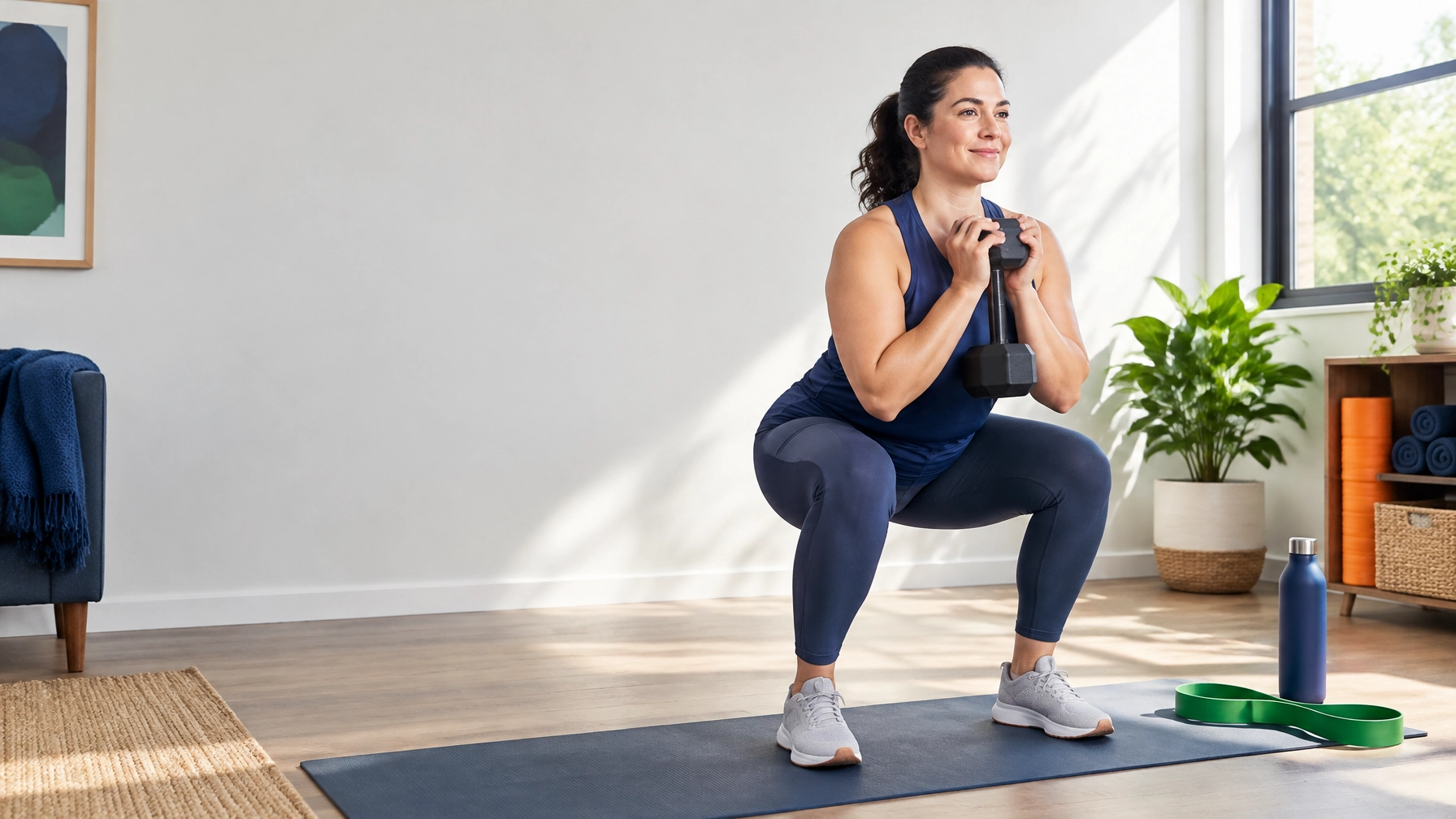
Weight loss is not only about seeing a smaller number on the scale. It is also about building a body that feels stronger, moves with confidence, and supports the life you want to live.
Strength training can help you work toward all of that. And no, you do not need a gym, a rack of weights, or years of experience to get started. Dumbbells, resistance bands, and bodyweight exercises all count.
Whether you want to lose weight, feel more toned, build strength, or simply feel better in your day-to-day life, strength work can be a useful part of your plan. It supports sustainable progress by helping you build and maintain muscle while you work toward healthier habits.
What “lifting something heavy” really means
“Heavy” is personal. It means a resistance level that feels challenging for you while still allowing you to move with control and good form. For one person, that might be a pair of dumbbells. For another, it could be a resistance band or a bodyweight squat.
The goal is not to prove how much you can lift. The goal is to give your muscles a reason to adapt, then build up gradually as you get more comfortable.
A beginner-friendly routine might include movements like:
- Squats to a chair
- Wall or counter push-ups
- Glute bridges
- Resistance-band rows
- Light dumbbell presses
You can start with the equipment you have. You can start with the version that feels manageable. Your starting point is simply where your journey begins.
Muscle supports a healthier weight-loss journey
When you lose weight, changes can include both body fat and lean mass. Strength training gives your muscles a reason to stay involved as you work toward your goals. With consistent practice and supportive nutrition, it can help you build muscle or preserve more of it during weight loss.
Why does that matter? Muscle supports strength, movement, and everyday capability. It helps you carry groceries, climb stairs, pick up a child, or keep up with the activities you enjoy. Those benefits are valuable even when they do not show up as a number on the scale.
Strength training can also change how your body composition looks and feels. You might notice that your clothes fit differently or that everyday tasks feel easier, even if the scale changes slowly. Progress has more than one measure.

A stronger metabolism, not a magic shortcut
You may have heard that building muscle “boosts your metabolism.” There is some truth to the idea that muscle uses energy, but it is not a quick fix or a reason to expect dramatic changes in your daily calorie needs.
The more practical benefit is this: strength training can help you build a stronger, more capable body while supporting changes in body composition. Pair it with nourishing food, regular movement, and habits you can keep up, and it becomes one part of a more complete weight-loss approach.
A systematic review and meta-analysis on resistance training and body composition found that resistance training can support improvements in body composition for people with overweight or obesity. The results are a helpful reminder that strength work can be part of weight management, while individual experiences will vary. Read the review on PubMed.
Strength makes everyday life feel more doable
There is a special kind of motivation in noticing that your body can do more than it could before. Maybe carrying bags feels easier. Maybe you feel steadier getting up from a chair. Maybe you have more confidence trying a new activity.
That everyday capability can help your healthy habits feel worthwhile. Instead of exercise feeling like something you do only to burn calories, strength work can become practice for the things you want to do in life.
And strength does not have to mean intense workouts. A few well-chosen exercises, done consistently at a level that suits you, can be a practical start. As you get stronger, you can adjust the resistance or movement to keep it appropriately challenging.
Mobility and strength work well together
Strength is not just about pushing harder. It is also about moving with control and comfort. Building strength through a comfortable range of motion can support the way you bend, reach, turn, and move through daily activities.
You do not need to force a deep squat or stretch into discomfort to make progress. Start with a version that feels steady. Use a chair for support if it helps. Choose a range of motion that works for you today, then build confidence over time.
A thoughtful approach can keep strength and mobility working together:
- Controlled movement helps you focus on how each exercise feels.
- Comfortable range of motion lets you practice without forcing your body.
- Gradual progression helps you build up as your skills and confidence grow.
If you are new to exercise, have an injury, or have a health concern, check with a qualified health professional about what is right for you.
No gym? You can still begin
A gym is one option, not a requirement. Bodyweight exercises can provide resistance. Bands are portable and easy to store. A pair of dumbbells can offer plenty of variety for a home routine.

The best setup is one you can use safely and consistently. Start small, choose movements you can control, and let your routine grow with your experience. It is okay if your first workout is simple. Simple is a strong place to begin.
Make strength part of a sustainable plan
Strength training works best as one piece of total body wellness, not as a punishment for what you ate or a promise of overnight change. Support your workouts with nourishing meals, regular daily movement, and habits that fit your life.
A sustainable weight loss program can help you bring those pieces together. It can give you a clearer path, practical support, and room to adjust your approach as your needs change.
If you would like guidance, Absofitly’s individual fitness coaching can help you work toward goals such as weight loss, muscle gain, performance, and overall wellness. You can also learn more about Absofitly’s weight loss programs, designed to support personal goals with a holistic approach.
For wellness practices and other organizations, fitness and wellness programs can also offer a way to bring supportive health services to the people you serve.
Become absofitly: nutritionally, physically, mentally
At Absofitly, becoming “absofitly” means caring for three connected areas of wellness: being nutritionally fit, physically fit, and mentally fit.
Strength training can support the physical part, and the confidence that comes from seeing yourself grow. Pair it with balanced nutrition and supportive habits, and you are building more than a workout routine. You are building a healthier way to care for yourself.

You do not need to be an experienced lifter to begin. You do not need perfect equipment or a perfect schedule. You just need a starting point that feels possible.
Ready to take your next step?
Whether you want to lose weight, feel stronger, move with more confidence, or improve your total body wellness, you deserve support that meets you where you are.
Get your free consultation with Absofitly and talk through your goals, your starting point, and the kind of guidance that could help you move forward. Your next step can be simple, and it can start today.

0 Comments