
A Sunday rest day can be a good moment to check in with how you’re feeling and plan for the week ahead. Maybe your muscles feel tired after a challenging workout. Maybe you’re looking for a little support as you build a routine you can stick with.
Some lesser-known supplements may support specific recovery goals. But the best recovery supplements are not magic, and what helps one person may not suit another. Think of them as optional tools, not a replacement for your regular meals, training plan, or professional care.
Here are six options worth learning about, with realistic expectations and safety notes to keep in mind.
1. Tart cherry: an option after demanding training
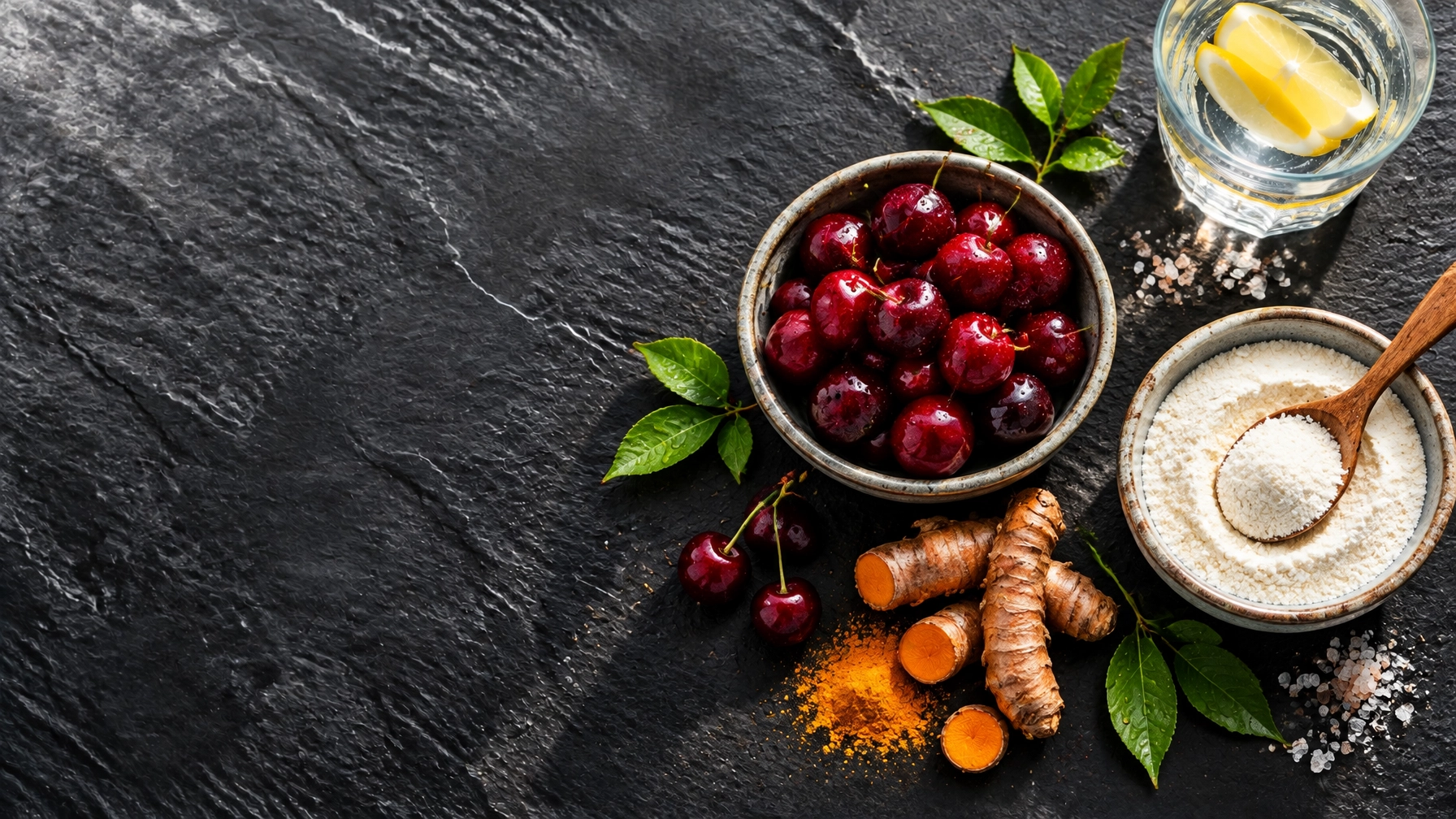
Tart cherry juice or concentrate is often discussed for exercise recovery. Research suggests it may help with some measures of muscle soreness or strength recovery after strenuous exercise, but results are mixed. It may be more relevant after a demanding event or training block than after every workout.
If you’re curious, look for a clearly labeled product and consider its serving size and added sugar. Cherry juice is still juice, so it’s worth fitting it into your overall nutrition goals.
Research review: tart cherry and recovery from strenuous exercise

2. Collagen peptides: a different kind of support
Collagen is not a quick fix for post-workout soreness. It has been studied alongside longer-term training for potential support of connective tissue and some measures of strength and recovery. The research is still developing, and it does not establish collagen as a must-have for everyone.
This may be of interest if your goal is to support consistent training over time. Choose a product with clear ingredients, and remember that collagen should complement, not replace, a varied eating pattern. If you have allergies or health concerns, check with a clinician before trying it.
Research review: collagen peptides and physical training
3. Curcumin: promising, but not proven for everyone
Curcumin is a compound found in turmeric. It is often promoted for inflammation and soreness, but studies of exercise recovery have not shown consistent results. That means it may sound appealing, but you should keep your expectations modest.
Turmeric supplements can cause stomach upset. Some high-bioavailability products have also been associated with liver injury. Be especially careful if you take medication or have a health condition. The National Center for Complementary and Integrative Health (NCCIH) offers helpful safety information.
4. Ashwagandha: consider the goal, and check safety
Ashwagandha is sometimes used to support stress or sleep. That may matter to your overall recovery, but it is not a proven muscle-repair supplement. Studies have found possible sleep benefits for some people, though more research is needed.
It can cause side effects and may interact with medicines. NCCIH advises extra caution for people who are pregnant or breastfeeding, have thyroid or autoimmune conditions, or are preparing for surgery. Rare liver injury has also been reported. Review NIH guidance on ashwagandha and talk with a healthcare professional before use.
5. Electrolytes: useful when you’ve lost a lot of sweat
Electrolytes are minerals that help your body maintain fluid balance. An electrolyte drink may be useful after a long, hot, sweaty workout or when you’ve lost a lot of fluid. For an ordinary short workout, many people can meet their needs with water and regular meals.
Check labels for sodium, sugar, and serving size. More is not automatically better, and supplements with extra minerals may not be appropriate for everyone. If you have a medical condition or take medication that affects fluid balance, ask your clinician what’s right for you.
Research review: oral rehydration beverages after exercise-related dehydration
6. Vitamin D and zinc: think “check first”
Vitamin D and zinc are important nutrients, but taking extra is not a guaranteed way to improve recovery. Supplementing may make sense if you have a deficiency or a clinician identifies a reason to use them. High doses can cause harm.
For vitamin D, more is not always better: the adult upper intake level is 4,000 IU per day from all sources, unless a clinician recommends otherwise. Too much zinc over time can interfere with copper absorption. Read the NIH vitamin D fact sheet and NIH zinc fact sheet before adding either to your routine.
What about natural weight loss supplements?
The phrase “natural weight loss supplements” can make products sound simple and safe. But natural does not automatically mean effective or risk-free. These recovery options are not proven fat burners, and none can replace a sustainable approach to nutrition, movement, and health habits.
Recovery support may help you feel more ready to keep showing up for your goals. That can be useful on a weight-loss journey, but supplements should not be treated as the reason weight changes. Be cautious of products promising fast results or dramatic “metabolism” effects. NCCIH shares guidance on dietary supplements marketed for weight loss.
A simple Sunday reset: pick one next step
You don’t need to buy six new products to make progress. Choose one question to take into the week:
- Is there a specific goal I want a supplement to support?
- Have I checked whether it may interact with my medication?
- Does the label clearly list ingredients and amounts?
- Would guidance from a clinician help me decide?
If you do choose a supplement, look for transparent labeling and independent quality testing where available. Introduce one change at a time, and pay attention to how you feel.

Become absofitly: support the whole you
At Absofitly, becoming “absofitly” means building three connected pillars: nutritionally fit, physically fit, and mentally fit. Whether you want to lose weight, feel stronger, improve your routine, or simply feel more supported, your goals deserve a plan that fits you.
Our wellness and weight loss coaching and individual fitness coaching are designed to help you take practical steps at your own pace. Supplement questions can be part of your conversation, too, without making supplements the whole plan.
Ready to take a supportive next step? Get your free consultation and start building a routine around your goals.
This article is for general information only and is not medical advice. Talk with a qualified healthcare professional before starting a supplement, especially if you take medication, have a health condition, are pregnant, or are breastfeeding.

0 Comments